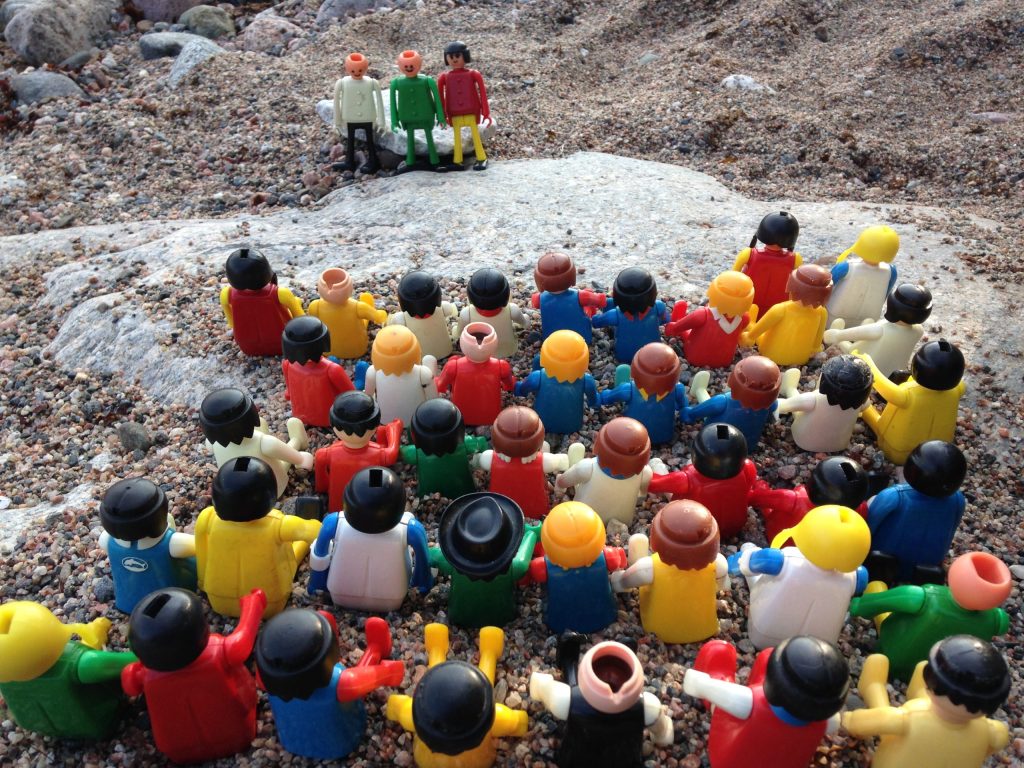
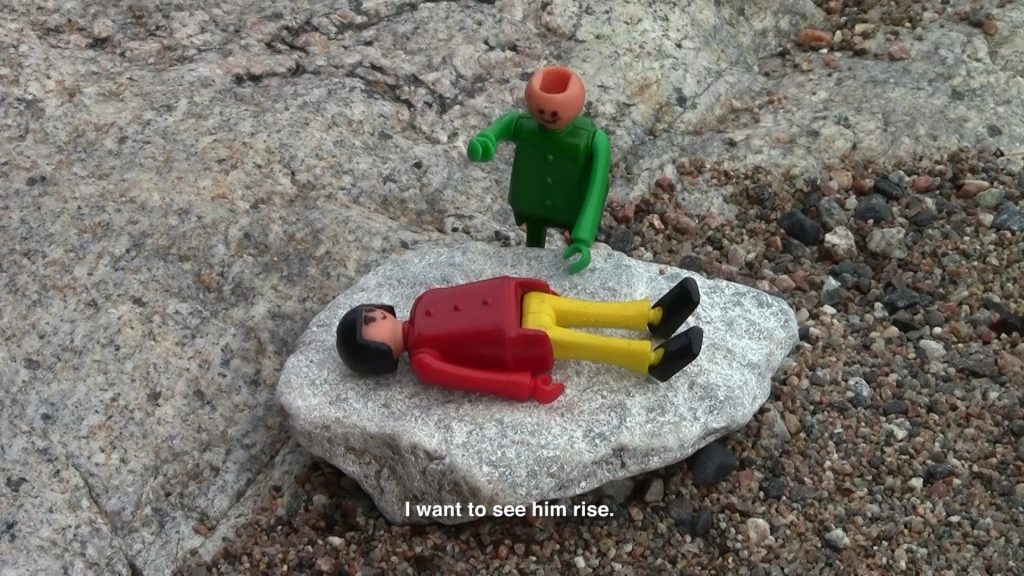
Nina Katchadourian and her brother Kai spent many of their childhood summers playing an elaborate game centered around two families of Playmobil people. The siblings became so deeply invested in the lives of these characters that when Matti, the patriarch of the Båtsman clan, and his son Steve were caught in a riptide, Kai was nearly swept away while trying to save them.
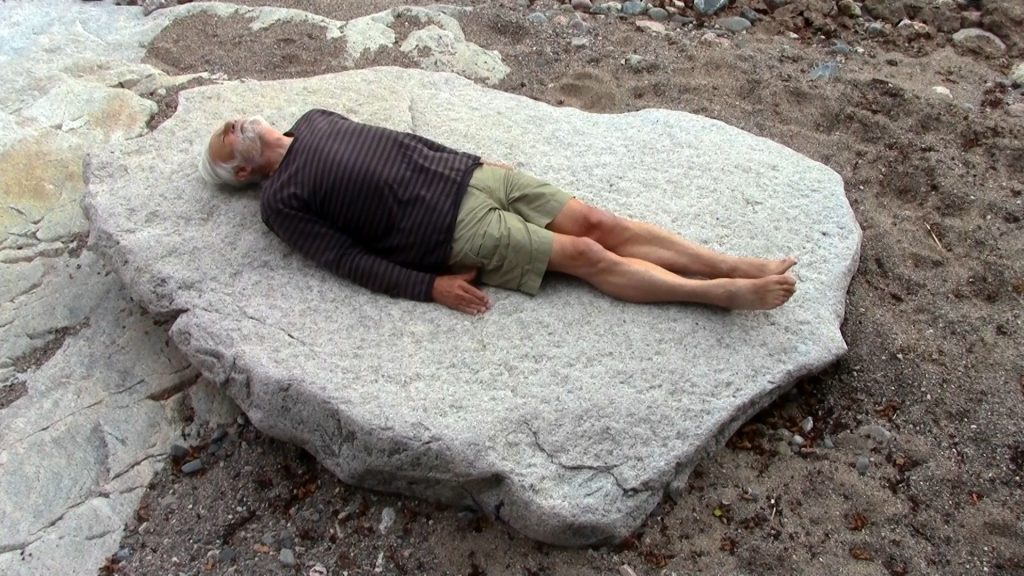
Following the loss of Steve and Matti, Nina and Kai invented a ‘Recarcassing Ceremony’ to transfer the souls of the departed characters into new ‘blank’ figures. The Recarcassing Ceremony features original audio recordings from 1980 alongside family interviews and restagings created in 2016.
Nina Katchadourian is an interdisciplinary artist based between Brooklyn and Berlin. Her work is part of the central exhibition at the 2026 Venice Biennale.
Nina introduces the work as follows:
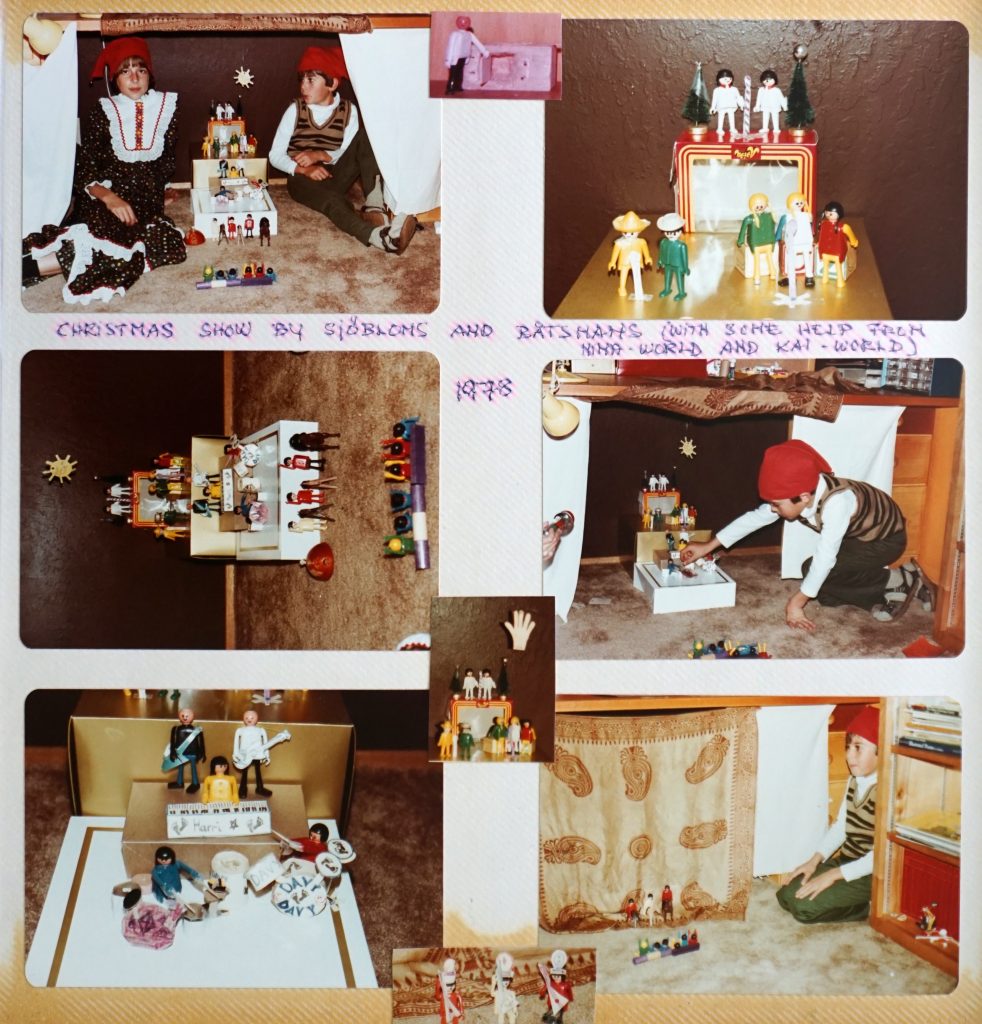
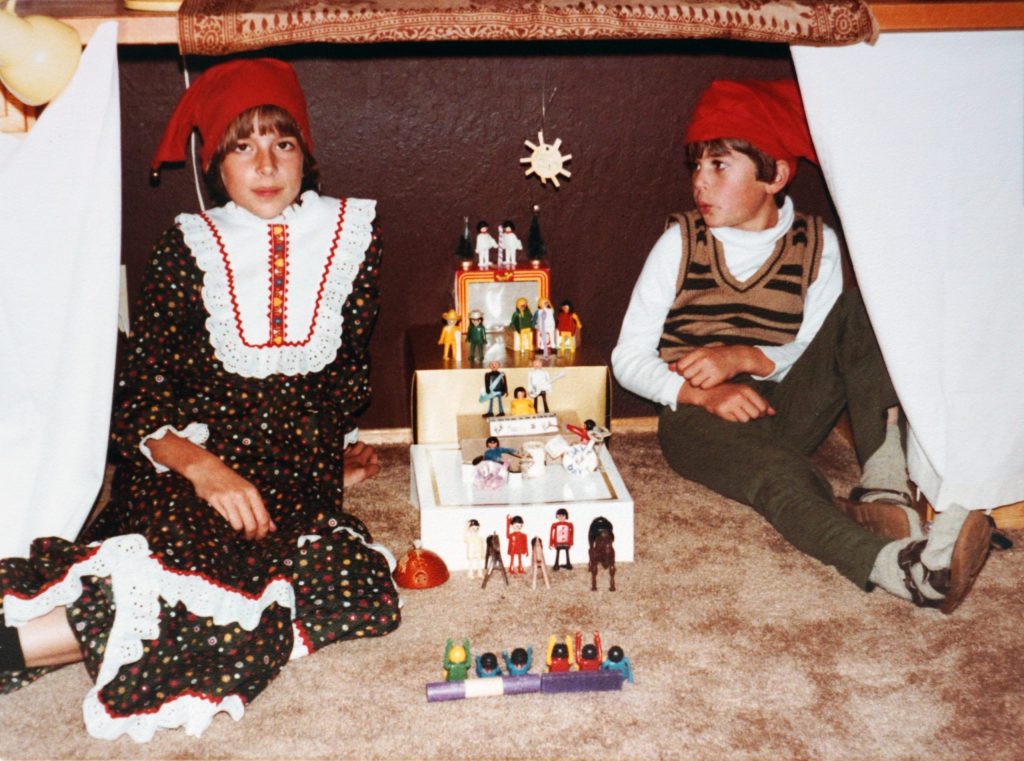
My younger brother, Kai, was my constant companion during our family summers in the Finnish archipelago. We invented many games during the three months when we had only each other to play with, but the most important one started when I was nine and continued for roughly four years. It involved two families of little Playmobil figures, each controlled by one of us. We had shadow roles as “KaiWorld” and “NinaWorld,” benevolent companies that provided the families with everything they wanted, from wooden boats to rock-and-twig seaside encampments to multilevel tree houses.
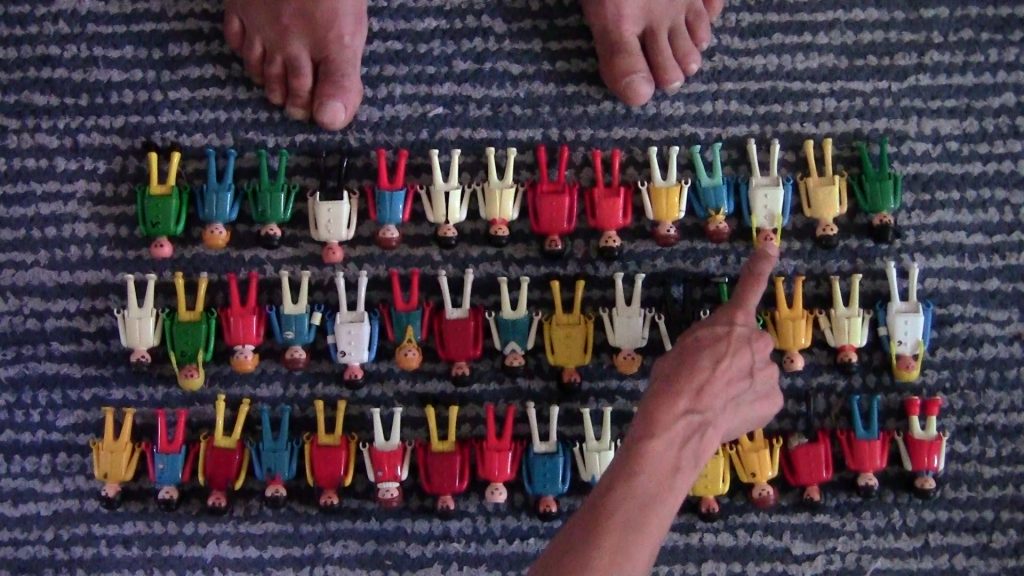
Our imaginations and emotions were deeply invested in this world. The ever-expanding families eventually reached fifty-six members; we named each person and could tell each apart from the others. My family were the Sjöbloms Kai’s family, the Båtsmans. Like many powerful clans, their bloodlines were joined when the oldest Båtsman, Steve, married the oldest Sjöblom, Maggie. Their huge wedding took us most of the day to stage and execute. The Sjöbloms and Båtsmans operated a complex printing press, owned several boat transportation lines, and ascended “Mount Katchadourian” once every summer. They staged rock concerts with elaborate sets and small paper instruments (provided by KaiWorld and NinaWorld), and Kai and I sang along (in character) to cassette tape recordings of our ABBA and Beatles LPs. The two families always spoke and sang in a very distinctive accent, close but not exactly like the local Finlandswedish dialect.
One year, we took Matti and Steve Båtsman (the father and oldest son of Kai’s family) to a wild northern California beach where the waves and undertow are notoriously dangerous. Some distance from the rougher waters, Steve and Matti were on a small river in a toy boat when it was taken by a riptide. Kai was nearly swept away in his attempt to rescue them, as I stood screaming from the shore for him to come back. Together, we saw Steve and Matti disappear into the depths.
This devastating event was also a narrative disaster: we needed these characters in the game. The next summer in Finland we procured two new figures and staged what we called a “Recarcassing Ceremony.” The souls of the departed would be installed into new bodies, and Steve and Matti could be brought back. This ten-minute ceremony, captured on audiotape by our parents, involved moving eulogies, televangelistic testimonials, and pagan chanting, culminating in intense celebration when the two characters rose again. We ended by burning paper representations of the old characters to fully break with all past memories of them.
According to my brother, not too long after the Recarcassing Ceremony in 1980, my newly acquired teenage interests overwhelmed my interest in the game and I refused to play it any longer. In 2016, I made a video called The Recarcassing Ceremony that includes the audio recording of the ceremony, restagings of both the sinking of the boat and the ceremony itself, and extensive interviews with my parents and Kai. It was the first time they heard the recording and also the first time I apologized to my brother for ending the game.